by Mark Harman
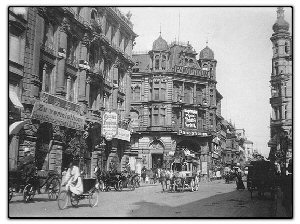
For Franz Kafka, Berlin was not so much the real city on the Spree as his private symbol for much that he felt was lacking in Prague. Already in 1902, as a nineteen-year-old student, he had coined an often-quoted metaphor for Prague: “This little mother has claws.” That fiercely maternal, if jocosely ironic, image already suggests the impossibility of his ever quite breaking loose. And throughout his life he felt that Prague was “very un-homelike, a place of memories, of nostalgia, of pettiness, of shame, of seduction, of the misuse of power.” Berlin, on the other hand, became a screen onto which he could project inaccessible longings and dreams of escape, and he soon integrated it into the web of metaphors through which he viewed his every experience.
While Kafka’s continual preoccupation with Berlin is certainly no secret, critics and biographers haven’t quite done justice to the city’s place in his inner life. Here I wish to explore the tension between his exuberant initial image of Berlin and the grim reality he encountered when he went to live there in the fall of 1923. I should also like to report on an ultimately futile yet perhaps not entirely unproductive search for missing letters that Kafka wrote for a little girl in the suburb of Steglitz, a search which I carried out on the side while I was in Berlin a couple of years ago writing a series of linked essays about the furtive autobiography underlying all of his writings.
Although some commentators trace Kafka’s fascination with Berlin to his first meeting with Felice Bauer at the Brod family apartment in Prague in August 1912, he had in fact visited the city earlier, in December 1910, after cutting short a visit to Paris with Max Brod and his brother. His initial, almost giddy, response to the city blends exuberance, naïveté, and angst in a manner reminiscent of Karl Rossmann, the guileless hero of his first novel, Der Verschollene (best known under Max Brod’s misleading title Amerika but which I intend to call Missing or Missing Person in a new translation that I am currently completing). Though Kafka was subsequently forced to acknowledge the less rosy, more complex reality of the city, a strain of this near-euphoria about Berlin persisted to the end of his life.
In 1910 he writes about the city’s theater with the enthusiasm of a culture-starved young man from the provinces. Uncharacteristically, he is in such a good mood that “he cannot quite stop laughing,” thanks partly to Berlin, partly to comedies by Molière and Shakespeare at the Kammerspiele. he also attends a performance of Hamlet, starring the celebrated silent-movie actor Alfred Bassermann. Like many diffident intellectuals before and after him, Kafka identifies with Hamlet, indeed so much so that he has to look away from the stage to regain his composure. Much the same happens with respect to Berlin. So absorbed is he in his inner musings that he barely perceives the actual city: “I’m just listening in on myself.” This inattentiveness to the urban bustle changes whenever he finds a nook where he, the “foreigner,” can feel at home, as, for instance, in a vegetarian restaurant where he rhapsodizes about the semolina pudding, raspberry syrup, lettuce with cream, gooseberry wine, and strawberry-leaf tea.
Throughout the voluminous correspondence with his fiancée, Felice Bauer, from 1912 to 1917, he keeps trying to imagine in extraordinary detail her everyday life in a partly real, partly imaginary Berlin. And this preoccupation with Berlin remains even when his relationship with Felice wanes. In july 1914, immediately after the dissolution of their first engagement at a hotel called the Askanischer Hof near the Anhalter railway station, he states in a letter to his parents that his life in Prague can lead to “nothing good” and that he isn’t “finished with Berlin.” he declares that he will resign from his job, leave Prague, and eke out a living for two years on his savings, some 5,000 crowns.
Unfortunately, the First World War broke out several days after he disclosed those intentions to his parents, and he felt obliged to abandon his plans. When he and Felice reestablished their relationship after a promising rendezvous in Marienbad in july 1916, they decided to live elsewhere: this time the idea was to set up their household not in Prague but in a suburb of Berlin. The following year another fateful intervention put an end to this project-coming this time not as a world-historical thunderclap but as a doctor’s diagnosis of TB.
After the dissolution of his second engagement to Felice in 1917, he became even keener on leaving Prague. Although often too absorbed in his personal struggles and fantasy life to pay much attention to political developments, he could not help becoming aware of the increasing xenophobia and anti-Semitism. In November 1920, in the wake of anti-Semitic riots in Prague, he muses to Milena Jesenská: “Isn’t it the best course to leave a place where one is so hated?” Given the private myth that Kafka had built up over the years about Berlin, it is hardly surprising that he should have thought of moving there. he hoped that the city would inoculate him against what he regarded as the blight of Prague, for, as he himself put it, “Berlin is the antidote to Prague.”
The following year he accomplished the “Napoleonic” feat of finally moving to Berlin. Even though he initially thought he would stay for only a couple of days, he nonetheless compared his impulsive move in September 1923 with Napoleon’s launching of his military campaign against Russia: “a foolhardiness whose parallel you can only find by leafing back through the pages of history, say to Napoleon’s march to Russia.” Before setting off on the short train journey from Prague to Berlin he had to put down an inner rebellion: “an attack by all the fears that I have, and no army in world history is as big as them.” Although some critics have dismissed such comparisons with momentous events in world history as ironic hyperbole or even ridiculous exaggeration, if we wish to understand Berlin’s symbolic significance for Kafka, we need to read such seemingly overblown analogies with empathy and imagination. Unlike Napoleon, Kafka seems to have realized that his expedition could not end well. Indeed, his very choice of Napoleon’s foredoomed Russian campaign as an analogy implies a stoical acknowledgment of his own worsening illness. By autumn 1923 his physical condition had deteriorated considerably, and he was sporadically aware that the end could not be far off.
On arrival in Berlin in September 1923 he does his best to insulate himself from the increasingly dismal reality of a city where unemployment has risen to almost a quarter million, violence is erupting between extremists on the right and left, and inflation is spiraling. he and Dora find an apartment in Steglitz, first on Muthesiusstrasse, and then on leafy Grunewaldstrasse. he avoids reading newspapers, not only because of the inflationary cost but because he is determined to shut out conversations about street fighting in the center of Berlin and instead to absorb only the green and harmonious world of Steglitz and later Zehlendorf. From Berlin he wants to suck the “sweetness” rather than the “poison” that seeps out whenever he glances at the Steglitzer Anzeiger or other newspapers hanging outside the Steglitz Town Hall. he also tries to avoid going into the city center. Whenever he must go, he returns “miserable.” When he gets off at the central Zoo station, the consequences are immediate: “I have trouble with my breathing, start to cough, become more anxious than I ordinarily am, see all the dangers of this city uniting against me.” By October 16, he has only been to the center three times, for he prefers his peaceful life in Steglitz where “the children look well, the begging is not frightening.” Jokingly, he even dubs the square outside the Steglitz Town Hall his own Potsdamer Platz, then the hub of Berlin. Yet even in Steglitz he cannot altogether ignore evidence that his chosen refuge is rapidly descending into near anarchy. he attempts to sound jocose, comparing the rocketing prices in Berlin to the squirrels jumping about back in Prague. However, he is on a fixed pension, and, in spite of sporadic monetary infusions from his family in Prague, the pair’s economic situation becomes increasingly bleak: “My room, whose rent used to be 28 crowns a month, cost over 70 crowns in September; in October it will cost at least 180 crowns.” So even he cannot help noticing the oddity of his choice of Berlin as a haven in 1923, especially for “poor impecunious foreigners,” who of course also happen to be Jewish.